
Online Gathering on
Six Mythological Keys to Self-KnowledgeSeptember 1 – 6, 2025 | 3pm and 8pm UTC

The ancient Greeks created their gods and heroes not only to explain naturally occurring events such as the rising and setting of the sun, and to provide inspiring stories, but as precise maps of human psychology. Each myth encoded specific insights about our inner workings—our struggles with identity, our relationship to higher influences, and the eternal conflict between our mechanical nature and our potential for transformation. During this six-day exploration, we will decode six essential Greek myths and extract from each a practical exercise for self-observation. Sessions will last 60-90 minutes with breaks, concluding with daily practices designed to verify these principles in your everyday experience. Our observations will form the foundation for the exploration of each following day.
The gathering will be at a cost. All sessions will be recorded for registered participants. Read more below:
Odysseus
The Question of Identity – Odysseus and the Cyclops
Our journey begins with Odysseus’ encounter with the Cyclops Polyphemus. When the hero and his men find themselves trapped in the giant’s cave, they escape by blinding him. As Polyphemus realizes he has been deceived, he demands to know his attacker’s name. “I am Nobody,” responds Odysseus, ensuring that when the other cyclops ask who harmed him, Polyphemus can only reply, “Nobody—nobody blinded me.” The key to this myth lies in avoiding the common mistake of attributing the word ‘I’ to our actions. In order to observe our internal manifestations in real time, we must divest them of the illusion that they represent our entirety. We must avoid calling them ‘I’.
Conscious Restraint – Tying Oneself to the Mast
Later in Odysseus’ epic journey home, the hero is warned by Circe of the irresistible song of the Sirens. No mortal can resist their lure, and those who are drawn to them find certain death. To prevent this , Odysseus plugs his men’s ears but leaves his own uncovered. He commands them to bind him to the ship’s mast and under no condition to release him. This way, he can hear the Sirens’ alluring song while resisting their pull. Each attendee will likewise be invited to choose one area of heightened identification, in the face of which they typically lose their sense of self. Together, we will formulate an exercise of ‘voyaging’ through identification consciously.
“‘Know thyself.’ These words, which are generally ascribed to Socrates, actually lie at the basis of many systems and schools far more ancient than the Socratic.” – George Gurdjieff
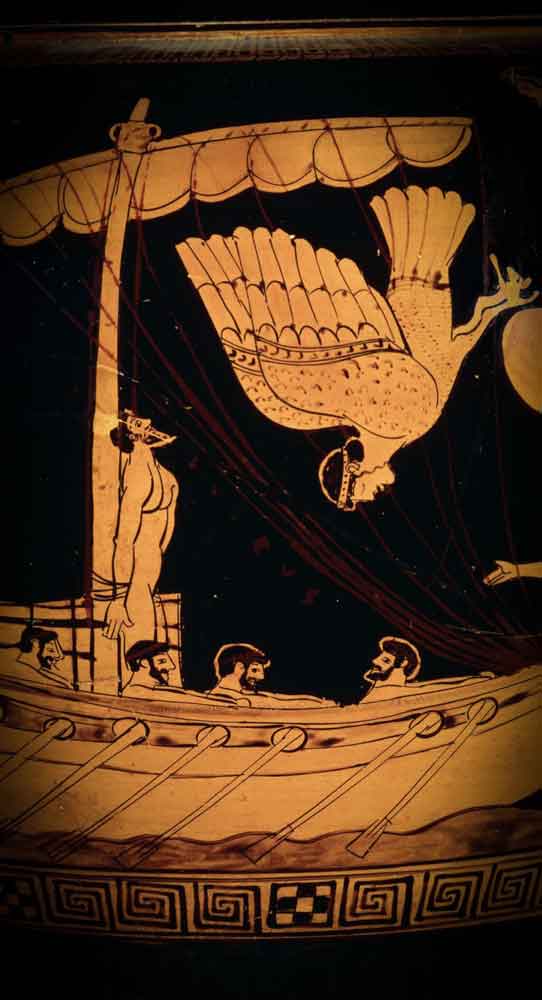
Odysseus tied to a mast | Greek Vase | 480 B.C.E.
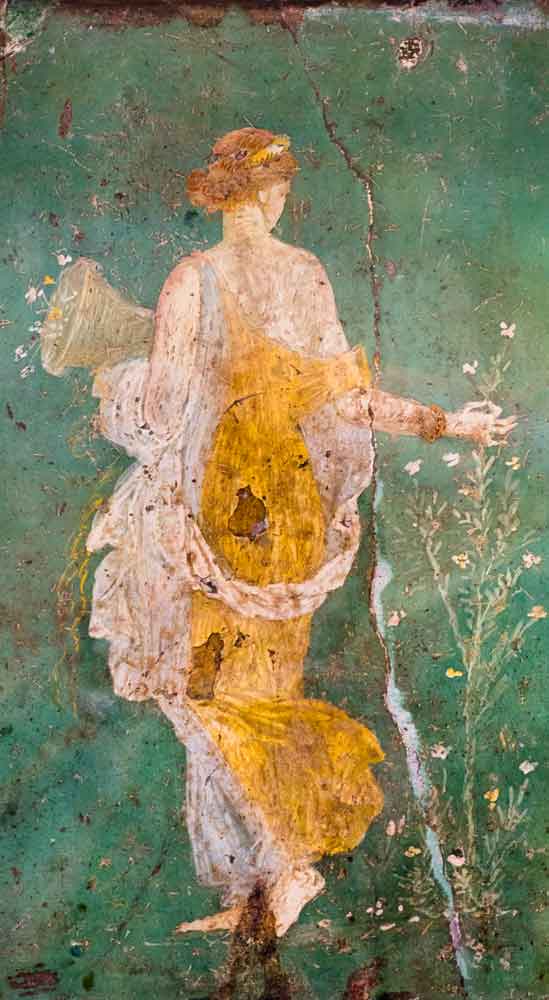
Flora (Persephone) | Pompei | 15-45 C.E.
Persephone and Icarus
Descent and Return – Persephone’s Journey
Persephone’s abduction by Hades and her annual return to the upper world maps one of the most fundamental principles in transformation: the necessity of conscious descent. Persephone must spend part of each year in the underworld before returning to bring spring to the earth above. This illustrates that we cannot transform what we do not know and cannot know what we refuse to visit. Our habitual patterns and unconscious reactions constitute our personal underworld, dark territories we typically avoid but must learn to navigate consciously. The descent is dangerous precisely because it involves direct contact with parts of ourselves that operate below the threshold of awareness. We will explore what it might mean to maintain a thread of effort even through lower states, a thread that can enable us to eventually emerge from them with deeper knowledge of ourselves.
The Danger of Premature Flight – Icarus and Daedalus
If Persephone’s story warns against remaining too long in lower states, the myth of Icarus reveals the opposite danger: flying too close to the sun. We harbor a tendency to become intoxicated by our own possibilities. Daedalus, the master craftsman, gives his son wings and precise instructions about using them, but Icarus cannot resist testing the limits of his newfound power. The tragedy of Icarus lies not only in his ambition but also in his inability to maintain the middle way between two extremes. We will examine how moments of higher understanding can become sources of self-deception if we mistake temporary states for permanent achievements.
“In no other religion are there such definite relations between gods and men as in the Greek myths. All the demi-gods, Titans and heroes of Greece were always direct sons of gods…” – Peter Ouspensky
Prometheus and Hercules
Stealing Sacred Fire – The Prometheus Impulse
Prometheus stealing fire from the gods speaks to a fundamental paradox found across many wisdom traditions: divine knowledge acquired by mortals against divine decree. Like Adam and Eve gaining forbidden knowledge in the Garden of Eden, Prometheus represents the moment when humanity acquires something that belongs to a higher realm—consciousness, illumination, the capacity to see clearly. The acquisition of this sacred fire opens unprecedented possibilities for human development, yet also makes humanity more dangerous—to themselves and to the cosmic order. The myth suggests there is a way to receive this fire legitimately, one that depends on our ability to value what we have been given. Mortals must pay for their unique gift.
The Possibility of Immortality – Hercules and Divine Transformation
Our final session examines the Greek understanding of what it means to achieve immortality. Unlike our modern conception of simply living forever, the Greeks saw immortality as a fundamental transformation of being—the creation of something within us that is not subject to the ordinary laws of decay and death. Hercules achieves immortality through the completion of twelve labors, each requiring him to develop different capacities. In contrast, the goddess Demeter attempts to grant immortality to the infant Demophon by placing him in the fire in his family’s hearth each night to burn away his mortal soul, but the process is interrupted by his mother, preventing its completion. These stories suggest that immortality cannot be gifted directly. A mortal can only earn it through deliberate and intelligent effort.
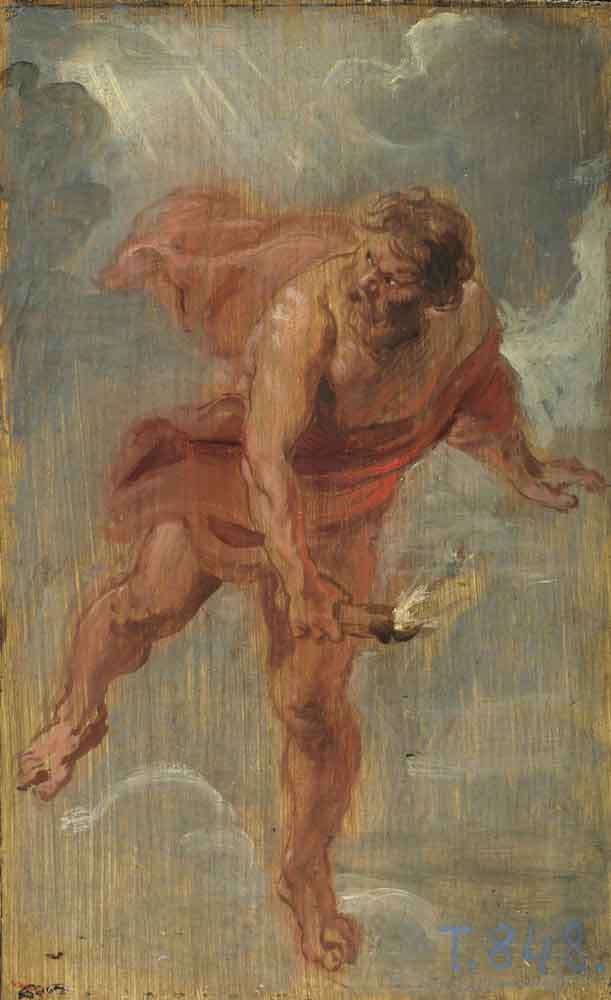
Prometheus | Peter Paul Rubens | 1636 – 1637 C.E.
“In historical Greece… secret societies of priests and initiates arranged special festivals every year which were accompanied by allegorical theatrical performances… The character of the theatrical performances and allegorical dramas… was always one and the same, namely, the death of the god and his resurrection.” – Peter Ouspensky

Online Gathering on
Six Mythological Keys to Self-KnowledgeSeptember 1 – 6, 2025 | 3pm and 8pm UTC