
Online Gathering on
Reconstructing the Original Mechanics of Prayer
A six-day online workshop on prayer, mantra, and the Egyptian Amduat…
14 – 19 September 2026

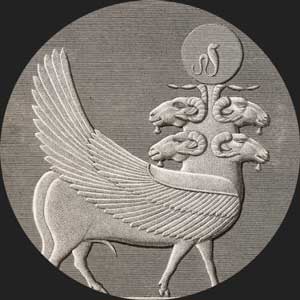
Prayer is universal. Every tradition practices some form of prayer and everyone has witnessed it practiced, whether or not they believe in it. Yet what survives of prayer today is a thin remnant of something once far more structured: an intentional mechanism worn down by generations into habit. In this six-day online gathering, we will explore how that mechanism originally functioned and how it could be used today. We will anchor our experiments in an ancient Egyptian text that maps the sun god Ra’s twelve-hour passage through the night. We will map this metaphorical passage onto a mantra of six mono-syllabic commands meant to be intoned over six breaths, and daily explore the application of this mantra and its different elements in our everyday life. By the end of the gathering, we should have ample evidence to assess whether our mantra effectively maintains the light of our consciousness through our daily challenges.
The gathering will be at a cost. The meetings will be recorded and made available for viewing afterwards. Read more below:
The Biggest Challenge of the Human Being
We assume ourselves to be one. Yet careful self-study exposes this assumption as false. What we decide with one part of ourselves is undone by another before the day is over. We resolve, then abandon our resolve without even remembering having made it. The root of this internal contradiction lies in our being governed by three largely independent brains: intellectual, emotional, and physical. We will begin our exploration of prayer with the study of these different brains, how each pursues its own priorities, rarely consulting the other two, and how none of them on its own can rightly represent the whole.
Prayer, in its original form, was not a request addressed to something outside of us. It was an inward petition aimed at uniting our three brains into a single agreement. To think, feel, and act toward the same aim all at once. This interpretation reframes prayer as intentional, replicable and measurable, not a mechanical habit. The mantra we will gradually construct in this gathering will attempt to draw thought, feeling, and posture in the same direction, for a specified duration of time.
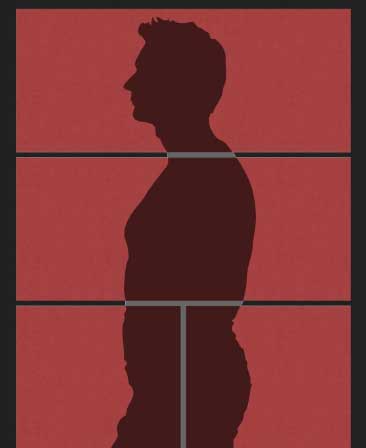
Diagram of the Three Brains
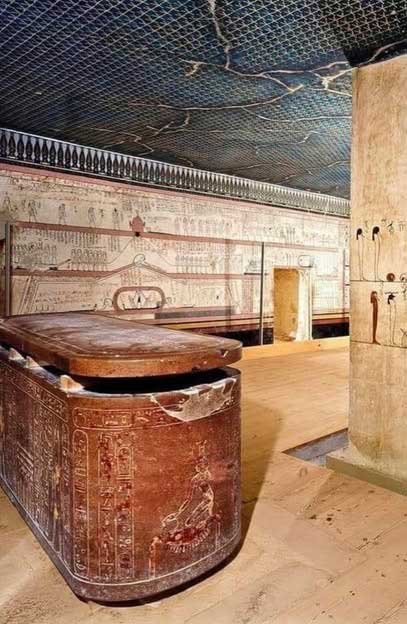
Tomb of Tuthmosis III
Amduat: the Egyptian Book of the Hidden Chamber
The oldest surviving version of the Amduat appears on the walls of the tomb of Tuthmosis I, in Egypt’s Valley of the Kings, roughly 3,500 years ago. For centuries it remained one of the most closely guarded funerary texts, painted only on the walls of royal burial chambers, meant to guide the pharaoh’s passage through the night alongside the sun god himself. This may or may not be the source of prayer’s original mechanism, but it is certainly its oldest intact record. And because no one today prays to Ra, we can study its logic without the weight of belief or doctrine that would accompany a living tradition.
The Amduat divides the sun god Ra’s nightly journey into twelve hours, one for each division of the night. Ra sails through the underworld in his solar barque, passing the shadows of the dead and confronting the serpent Apophis, who threatens to swallow him before he can complete his passage. At the deepest and most perilous hour, Ra unites with the buried body of Osiris, and from this union draws the power to continue. He emerges at the twelfth hour reborn as the scarab-god Khepri, rising once more into the sky as the new day’s sun.
Later Teachings on Prayer
Prayer is not confined to any culture or era. It appears in the daily prostrations of Muslim salat, in the fixed hours of Jewish liturgy and the Christian Liturgy of the Hours, in the rosary and recited devotions of Christian worship, and in the mantras and chants of Hindu and Buddhist practice. Different in language and posture, each is nonetheless searching for the same thing: a way to gather the whole of the practitioner into a single, sustained effort.
Look closer, and several of these traditions converge in the same underlying structure. In Genesis, six days of divine utterance govern creation, closing on a seventh of rest. In Tibetan Buddhism, the six syllables “Om Mani Padme Hum” are intoned as one continuous phrase. In medieval Christian devotion, the Stations of the Cross originated as a twelve-station form of prayer. Whether or not these traditions had any contact with one another, they arrived at strikingly similar solutions. Each, in its own idiom, addressed the challenge with which we opened this gathering: a human being fractured into competing brains, and the need for a structured practice to draw them into one.
The pharaohs who commissioned the Amduat have been dead for over three thousand years. The gods who populate its twelve hours are no longer worshipped by anyone alive. But the three brains that divided them from themselves have remained. We inherit the same fracture the Amduat was built to address, which is why a method this old can still be tested, measured and used in a new way today.
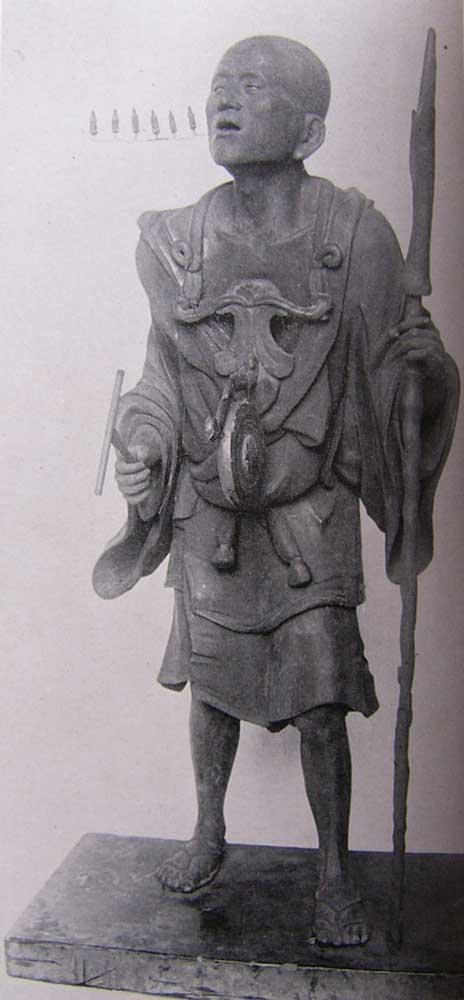
Sculpture of Kuya Intoning Six Syllables

Online gathering on
Reconstructing the Original Mechanics of Prayer14 – 19 September 2026