
Online Gathering on
The Twelve Functions
A four-day online workshop exploring the fundamental divisions of our psychology…
January 28 – 31, 2026

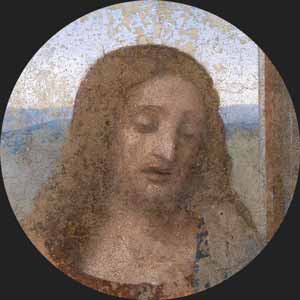
Our psychology is composed of four independent minds, each processing experience in its own way: the Intellectual function thinks and compares; the Emotional function feels and evaluates; and the Moving and Instinctive functions navigate and monitor the well-being of our physical body. These four rarely function harmoniously. More often, one dominates while the others are suppressed or ignored. Each of the four is subdivided into three parts. All parts are forced to cohabit, influencing one another and yielding twelve distinct modes of psychological operation.
In this four-day gathering, we will superimpose this twelvefold structure onto Leonardo da Vinci’s Last Supper, where the twelve disciples are arranged in four groups of three. Each group displays its own dramatic character—some lean forward in agitation, others recoil in disbelief, still others confer among themselves. We will explore this similarity and use it as a visual key to unlock our understanding of how our inner machinery operates.
The gathering will be at a cost. All sessions will be recorded for registered participants. Read more below:
The Moving Function
The moving function governs all voluntary movement of the body: walking, speaking, writing, gesturing, and every learned physical skill. It grants us the remarkable ability to automate complex sequences of action—riding a bicycle, typing on a keyboard, driving a car—which at first require our concentrated attention but through repetition become effortless. This capacity for automation does not remain confined to physical movement; it permeates the other functions and enables their fluidity. It helps our intellectual function connect words and meaning seamlessly, and our emotional function match reactions to social situations with practiced ease. In effect, the moving function operates like a rolling wheel that lends momentum not only to itself but to our entire psychology.
This rotational nature correlates the moving function with time. It “believes” time and equates it with progression and accomplishment. The task at hand is always a means to an end, a “now” pointing to a “later.” But being relegated to perpetual rotation, when “later” eventually arrives, the moving function perceives it as a new “now” to be sacrificed for an even later “later.” Under its influence, we fall into repetitive mechanical loops: continually replaying interactions, rehearsing imaginary conversations, humming randomly recalled tunes—momentums that color our internal landscape against our will.
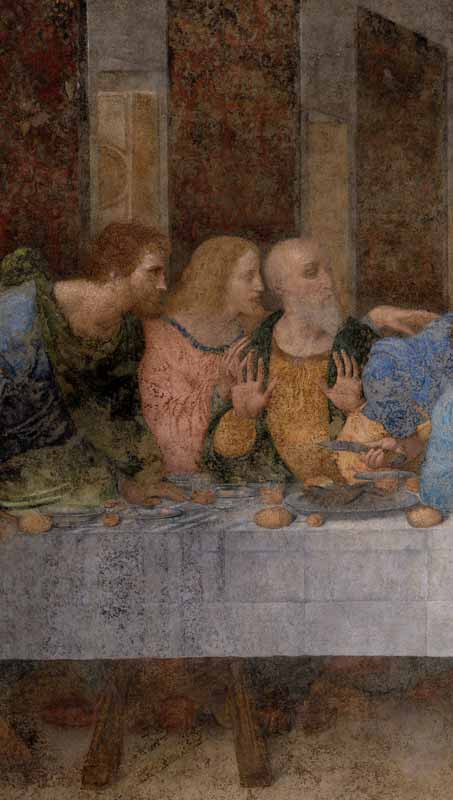
Bartholomew, James the Lesser, Andrew | The Last Supper | Leonardo da Vinci
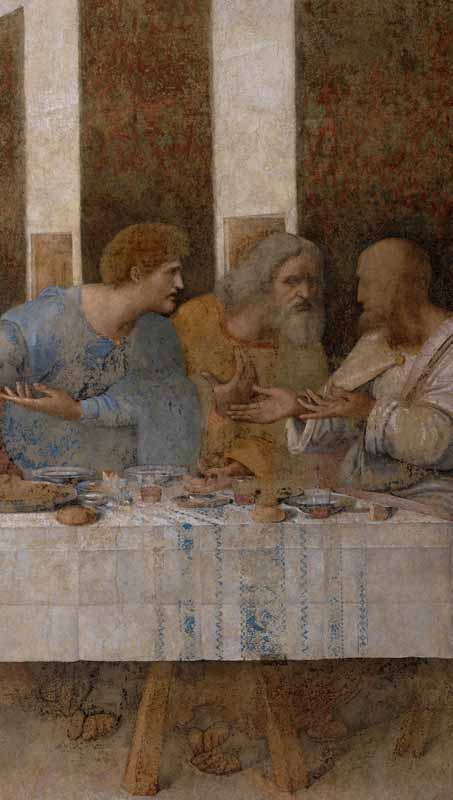
Matthew, Thaddaeus, Simon the Zealot | The Last Supper | Leonardo da Vinci
The Intellectual Function
The intellectual function reasons, compares, imagines, formulates words, and handles abstract concepts. Thanks to this function, we can entertain complex topics in our mind, break them down into components, and present them logically and coherently. We can replay yesterday’s events in our mind’s eye or plan for tomorrow—abilities only possible because we have power over abstraction. This capacity permeates and empowers the other functions. It enables the moving function to visualize objects and order them in space. It enables the emotional function to consider people’s character and devise different ways of approaching them. The whole concept of developing ourselves presupposes an ability to envision things being different than they are by nature—an ability with which we are endowed thanks to our intellectual function.
These examples, however, presuppose an aim. In the absence of aim, our intellectual function yields an irresistible stream of associative thoughts called daydreaming. Our attempts to observe ourselves soon reveal this associative thinking to be alarmingly more pervasive than we suspected. Even when we realize we are daydreaming at this very moment, and acknowledge it to be counterproductive, we are still strongly tempted to continue. This is because our unbridled daydreaming has become an addiction—it continually replaces reality with a flattering image of ourselves.
The Instinctive Function
The instinctive function governs all the inner workings of the organism: respiration, digestion, circulation, the healing of wounds, the regulation of temperature—processes that operate continuously without our conscious participation. It is hardcoded to favor conditions that aid survival and to avoid those that constitute a threat. It formulates its priorities accordingly, even when these conflict with the aims and preferences of our other functions. Without such instinctive drives we would lack the sense to avoid danger, lack the motivation to earn our daily bread, and lack the responsibility to provide for our offspring. Our species would face extinction.
The instinctive function’s priorities do not encompass inner development. As long as we make only brief and intermittent efforts to observe ourselves, it only mildly resists our progress. But once we attempt to introduce some form of inner discipline—some alternative government to our habitual way of functioning—the instinctive function senses its priorities are threatened and increases its resistance. It can make us feel too tired, too unwell, or too lightheaded to invest more attention than is strictly required. In this respect, the instinctive function is under the law of gravity. Like a river finding the easiest path to the sea, it always pursues the path of least resistance and greatest energy conservation.
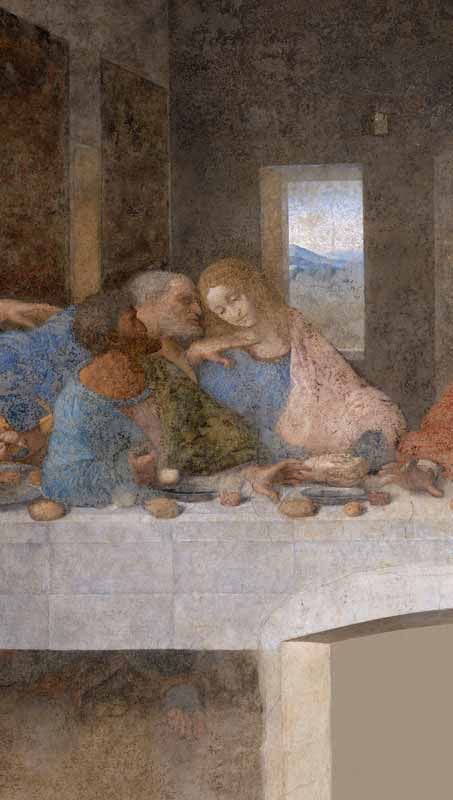
Judas, Peter, John | The Last Supper | Leonardo da Vinci
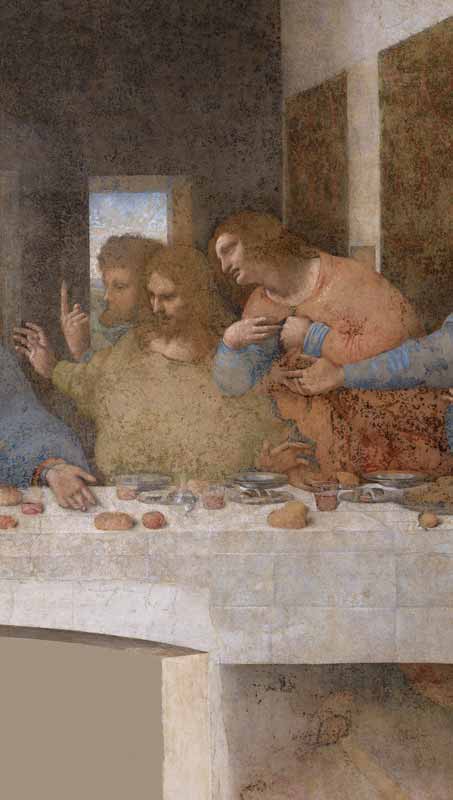
Thomas, James the Greater, Philip | The Last Supper | Leonardo da Vinci
The Emotional Function
The emotional function enables us to perceive beauty, feel people’s moods, perceive the motives behind their actions, and blend into social situations. Its complete spectrum extends far beyond these basic perceptions, reaching upward to transformative feelings such as awe, empathy, compassion, and remorse of conscience—feelings that alter how we see ourselves and the world around us. Yet since the development of our essence is typically arrested early in life, the emotional function—the function of essence—is usually atrophied. We take advantage only of its basic output of camaraderie, humor, and gossip, and rarely benefit from its higher and transformative range. It is as if we only used our smartphones to check the time.
When we try to study our emotions, we stumble upon an underlying attitude that makes their observation particularly difficult: their very arising sweeps us away. They come with a deep conviction that glues us to them and blinds us to their manifestation. This abandonment of our sense of self is called identification, and it exacts its strongest force on our emotional world. Our undeveloped emotional function distorts our perception by placing ourselves at its center. Everything is about us, everyone is ignoring or conspiring against us, everyone should be considering or acknowledging us. Misled by this bias, we take everything personally and experience difficult emotions about things that need not concern us whatsoever.

Online Gathering on
The Twelve FunctionsJanuary 28 – 31, 2026 | 3pm and 8pm UTC